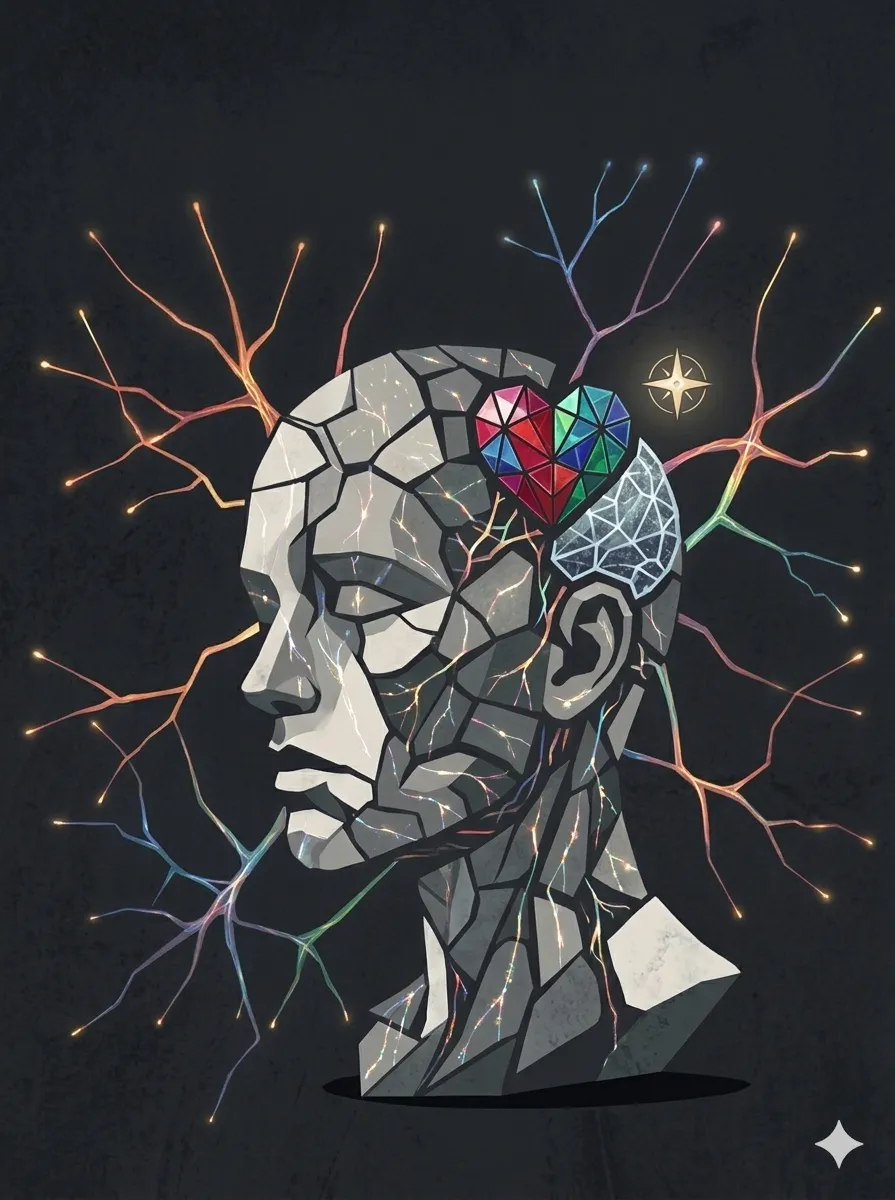
There is a growing awareness today about childhood trauma. People talk openly about father wounds, emotional neglect, poverty, insecurity, and the long shadow of growing up without stability or affection. For many, this conversation is deeply validating. It gives language to experiences that once felt invisible.
And the truth is simple: childhood experiences matter.
The environment we grow up in can shape how we see the world, how we trust others, and how we value ourselves. A child who grows up feeling loved and safe often learns that relationships can be secure. A child who grows up feeling neglected, abandoned, or constantly struggling may learn very different lessons.
So yes, childhood trauma is real. Its effects are real.
But there is another truth that is equally important, though sometimes harder to hear: our past may shape us, but it should not become the permanent explanation for how we live our lives.
At some point, growth requires us to look forward, not only backward.
The Reality of Childhood Wounds
Children are incredibly sensitive to their environment. They absorb everything around them, especially the way they are treated by the people closest to them.
When a father is absent, emotionally distant, or inconsistent, a child may internalize a painful message: Maybe I am not important enough to stay for.
When a family struggles with scarcity, a child may grow up believing there will never be enough. That belief can later appear as anxiety about money, competition, or a constant fear of losing stability.
When love feels conditional or unpredictable, the child may learn to protect themselves through avoidance. They may withdraw emotionally, struggle with intimacy, or avoid vulnerability altogether.
These patterns are not signs of weakness. They are often survival strategies that helped someone navigate a difficult childhood.
A child cannot control the environment they are born into. They simply learn how to adapt.
And those adaptations often follow them into adulthood.
When Survival Becomes a Habit
The challenge begins when childhood survival patterns continue long after the original situation has passed.
Someone who grew up feeling neglected may develop a deep sense of unworthiness. Even when people care for them, they might struggle to believe it.
Someone who experienced emotional instability may avoid difficult conversations or responsibilities because conflict feels threatening.
Someone who grew up with scarcity may constantly feel like they have to compete, control, or hold onto everything tightly.
These behaviors do not appear randomly. They are rooted in old emotional lessons.
But adulthood presents a new reality. The circumstances may have changed, but the patterns remain unless they are consciously examined.
This is where self-awareness becomes essential.
Understanding Without Justifying

Recognizing childhood trauma is not about blaming parents or rewriting the past. It is about understanding where certain emotional patterns began.
However, understanding should never become justification.
It is one thing to say, “My childhood influenced how I see relationships.”
It is another to say, “Because of my childhood, I cannot change how I treat people.”
The first statement leads to growth. The second can become an excuse.
Everyone carries wounds from their past. Some are visible, others are deeply hidden. But if we allow those wounds to control our actions indefinitely, we risk hurting the very people who are trying to care for us.
Sometimes people lie because they fear rejection.
Sometimes they withdraw because vulnerability feels dangerous.
Sometimes they push others away before they can be abandoned again.
But when these behaviors affect friends, partners, and loved ones, the pain spreads.
Understanding trauma explains behavior. It does not excuse it.
The Danger of Living in the Past
In recent years, many people have begun examining their childhood more closely. This can be healthy and necessary.
But there is also a subtle danger in constantly returning to the past.
If every emotional reaction is traced back to childhood, the present can become overshadowed by old narratives.
A difficult conversation becomes “my father issues.”
A mistake becomes “my trauma response.”
A broken relationship becomes “my childhood abandonment.”
While these connections may hold truth, constantly returning to them can prevent personal accountability.
The past should help us understand ourselves, not imprison us.
There comes a moment when healing requires asking a different question:
What kind of person do I want to become now?
The Power of Self-Awareness
Self-awareness is one of the most powerful tools for personal growth.
It means being honest about how our past has influenced us, while also recognizing that we have the ability to choose how we act today.
For example, someone who grew up feeling unworthy may notice they constantly seek validation. Instead of continuing the cycle, they can begin building self-worth internally.
Someone who learned avoidance as a child may realize they tend to withdraw when relationships become emotionally demanding. Awareness allows them to practice staying present instead of disappearing.
Someone who fears abandonment may recognize the urge to lie or hide mistakes to avoid conflict. With awareness, they can choose honesty instead.
None of these changes happen overnight.
But self-awareness creates the possibility for growth.
Your Father Does Not Define Your Worth
One of the deepest wounds many people carry relates to their relationship with their father.
When a father is distant, absent, or neglectful, a child may quietly conclude that they are not worthy of love or attention.
But the behavior of a parent does not determine the value of the child.
A father’s inability to give love often reflects his own struggles, limitations, or unresolved pain.
It is not a measure of the child’s worth.
Carrying that belief into adulthood can create a life of unnecessary self-doubt. People may settle for less in relationships, tolerate disrespect, or constantly question whether they deserve happiness.
But self-worth must eventually come from within, not from the approval that was missing in the past.
Breaking the Cycle
Healing from childhood trauma does not mean pretending the past never happened.
It means acknowledging it honestly, learning from it, and deciding not to let it dictate the future.
Some people grow up in environments filled with love and support. Others grow up in circumstances that demand resilience far earlier than they should.
But the past does not have to determine the ending of the story.
Each person eventually reaches a moment when they must choose whether they will continue repeating the patterns they learned or begin creating new ones.
Breaking the cycle requires courage.
It requires looking inward, recognizing our own behaviors, and taking responsibility for the way we treat others.
Moving Forward With Compassion
Perhaps the most balanced perspective is this:
Childhood trauma is real.
Its impact is real.
The pain people carry is real.
But healing is also real.
Growth is possible.
And responsibility is part of that growth.
Our past can explain many things about who we are. It can help us understand our fears, our reactions, and our emotional patterns.
But it should never become the permanent excuse for how we behave.
At some point, maturity asks us to move forward with greater awareness.
To treat others with honesty instead of avoidance.
To choose accountability instead of excuses.
To build self-worth rather than searching endlessly for validation.
The child we once were deserves compassion.
But the adult we become must take responsibility.
Because while our past may shape us, it does not have to define who we choose to be.