Travel teaches many things.
But one of the most meaningful experiences is discovering a country through its food.
Every place has a story.
Often, that story is told on a plate.
Food reflects many things about a nation:
-
Its history
-
Its traditions
-
Its beliefs
-
Its daily life
When you taste a local dish, you are not just eating.
You are experiencing the culture.
You are tasting traditions that have been passed down for generations.
You are sharing something that people have cooked, celebrated, and loved for centuries.
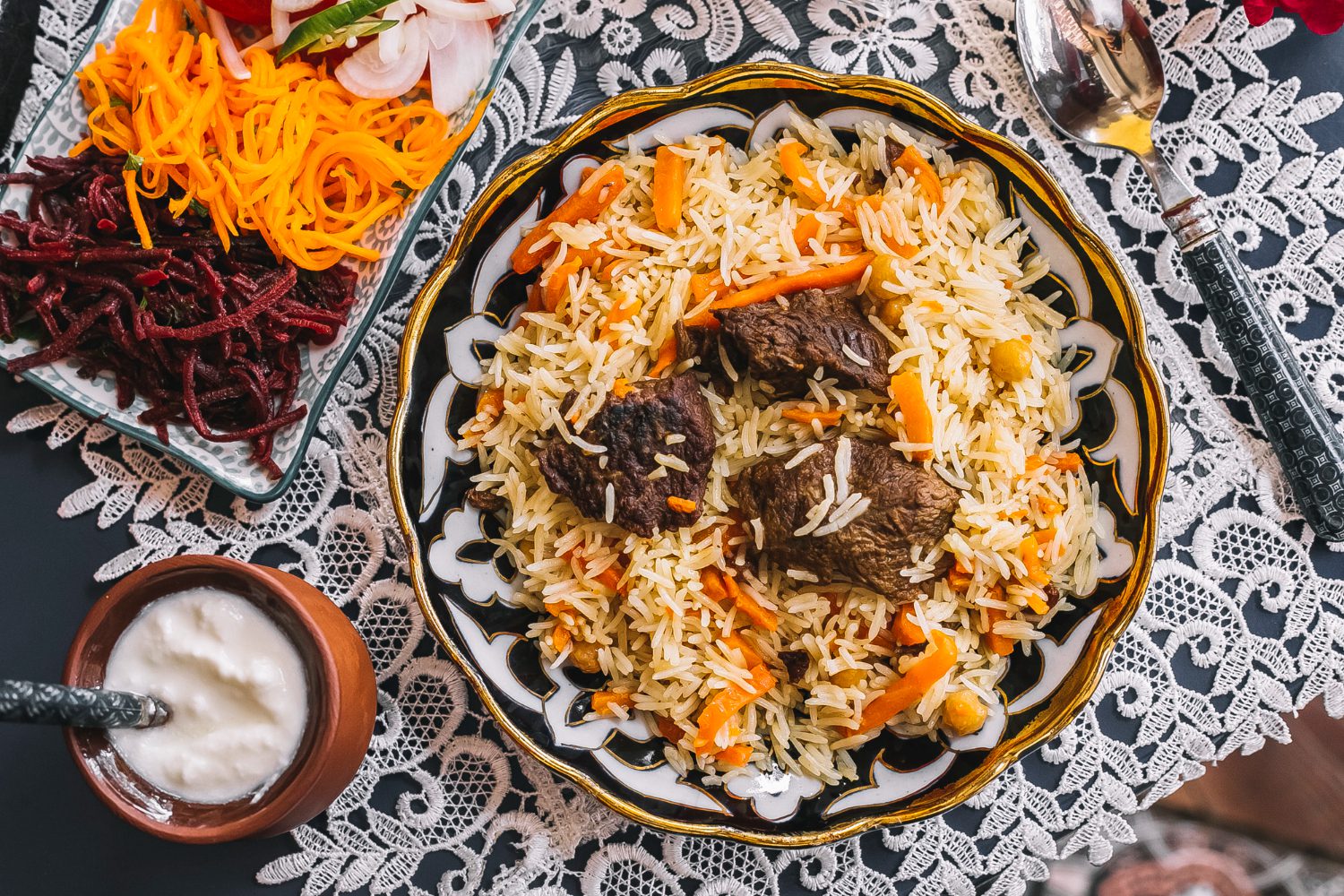
One of the most memorable parts of my trip to Uzbekistan was discovering its national dish, Plov.
Plov is also called osh or palov.
But plov is more than just food.
It represents:
-
Hospitality
-
Family
-
Celebration
-
Community
In Uzbekistan, plov is part of life.
It is served during:
-
Weddings
-
Family gatherings
-
Holidays
-
Simple meals shared with friends
A single plate of plov can bring people together.
People gather around it.
They talk.
They laugh.
They share stories.
Another beautiful thing about plov is that every region in Uzbekistan has its own version.
The basic ingredients are simple:
-
Rice
-
Lamb or beef
-
Carrots
-
Onions
-
Spices
But every region cooks it a little differently.
Those small differences tell the story of local traditions, geography, and culture.
Famous Types of Uzbek Plov
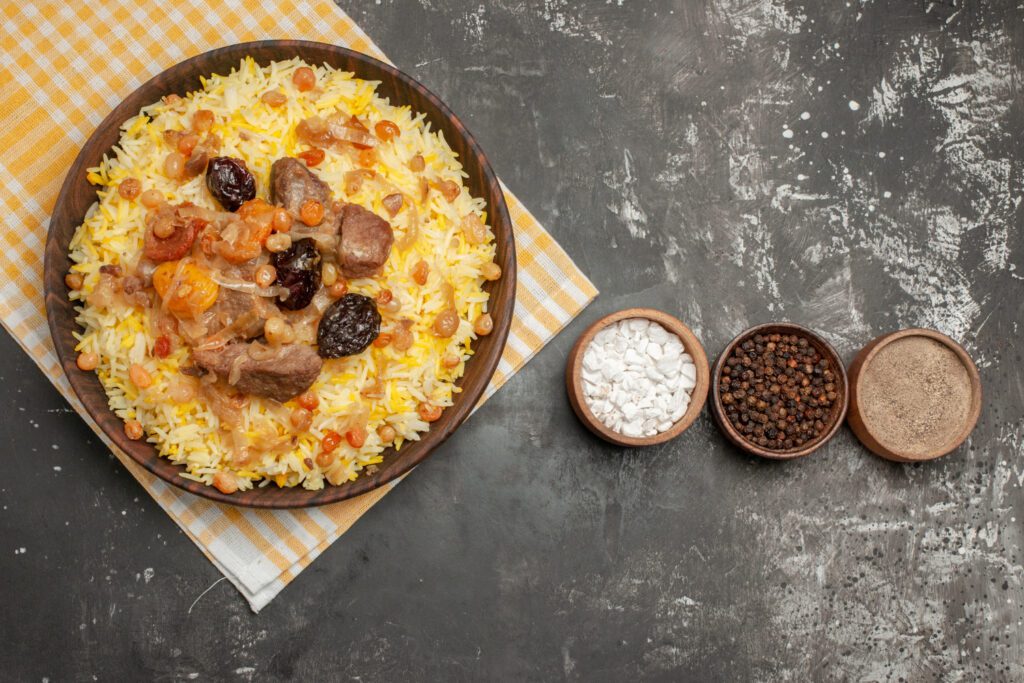
Tashkent Plov
From Tashkent, the capital city.
This is one of the most common versions.
It usually includes:
-
Beef or lamb
-
Rice
-
Carrots
-
Chickpeas
-
Raisins
-
Sometimes quail eggs
The raisins add a gentle sweetness.
This balances the rich flavor of the meat and spices.
The result is comforting and satisfying.
Samarkand Plov
From the historic city of Samarkand.
This plov is cooked in layers.
Instead of mixing everything together, the ingredients are placed in order:
-
Meat at the bottom
-
Carrots in the middle
-
Rice on top
This method allows each ingredient to keep its own flavor.
The dish becomes aromatic and slightly lighter.
Bukhara Plov
From the ancient city of Bukhara.
This version is sometimes called Oshi Sofi.
It has been influenced by the traditions of the Bukharan Jewish community.
It may include:
-
Green herbs
-
Additional spices
-
Sometimes chicken instead of lamb
The flavors are lighter and very fragrant.
Fergana Plov
From the Fergana Valley.
Many locals consider this the classic Uzbek plov.
It is:
-
Rich
-
Flavorful
-
Hearty
It is often cooked with large pieces of lamb.
The dish is prepared in a large cast iron pot called a kazan.
This pot helps the ingredients cook slowly while absorbing the spices and oils.
Khorezm Plov
From the Khorezm Region.
This version is unique.
The rice is steamed separately before it is mixed with the other ingredients.
This creates a very fluffy texture.
It is also usually made with yellow carrots, which add a gentle sweetness.
Andijan Plov
From the city of Andijan.
This is one of the richest types of plov.
It often uses:
-
More lamb fat
-
Stronger spices
The flavor is deep and intense.
Because of its richness, it is often served during big celebrations.
Wedding Plov
Also known as Toy Oshi.
This plov is prepared for weddings across Uzbekistan.
It is festive and generous.
It often includes:
-
Chickpeas
-
Raisins
-
Quail eggs
-
Kazy, a traditional horse meat sausage
Huge portions are cooked to feed hundreds of guests.
It shows how food becomes part of life’s most important moments.
During our visit to Tashkent, we had the chance to try plov at the famous Besh Qozon Pilaf Center.
This place is one of the most famous plov centers in the country.
-
Locals come here
-
Tourists come here
-
Even chefs visit to see how plov is made
What makes this place special is how they cook the dish:
-
Giant kazan pots are used
-
Massive batches are prepared
-
Hundreds of people can be served at once
Watching the cooks prepare the plov is unforgettable.
They move with experience.
They know exactly when to stir.
They know exactly how much heat is needed.
It feels like watching a craft that has been perfected over many years.
We tried different types of plov there.
My favorites were:
-
Tashkent plov
-
Wedding plov
The flavors were rich but comforting.
The rice was fragrant.
The meat was tender.
The spices were warm and satisfying.
As someone who loves rice dishes, plov quickly became one of my favorite foods during the trip.
Of course, plov may not be for everyone.
Everyone has different tastes.
But plov is special for another reason.
It is meant to be shared.
-
Families eat it together
-
Friends gather around it
-
Conversations happen over large plates of rice and meat
It is not just about the flavor.
It is about the moment.
In many ways, plov represents the spirit of Uzbekistan.
-
Warm
-
Welcoming
-
Deeply rooted in tradition
When you try plov, you are tasting more than a dish.
You are tasting:
-
History
-
Culture
-
Community
If you ever travel to Uzbekistan, trying plov is a must.
Not just for the flavor.
But for the experience.
Because sometimes the best way to understand a place is simple.
Sit down.
Share a meal.
And listen to the stories that come with it.